
WPU GŌA
Centre for Design Research at WPU GŌA

Centre for Design Research

The Centre for Design Research is established to advance transdisciplinary design inquiry that meaningfully integrates technology, society, culture, ecology, and governance. This centre serves as a central knowledge catalyst at WPU GŌA, connecting Research Institutes (RIs), Living Learning Scholar Communities (LLSCs), and global partners to produce human-centred, ethically grounded, and future-ready design knowledge. It positions WPU GŌA as a leader in systemic, research-driven, application-oriented design impact.
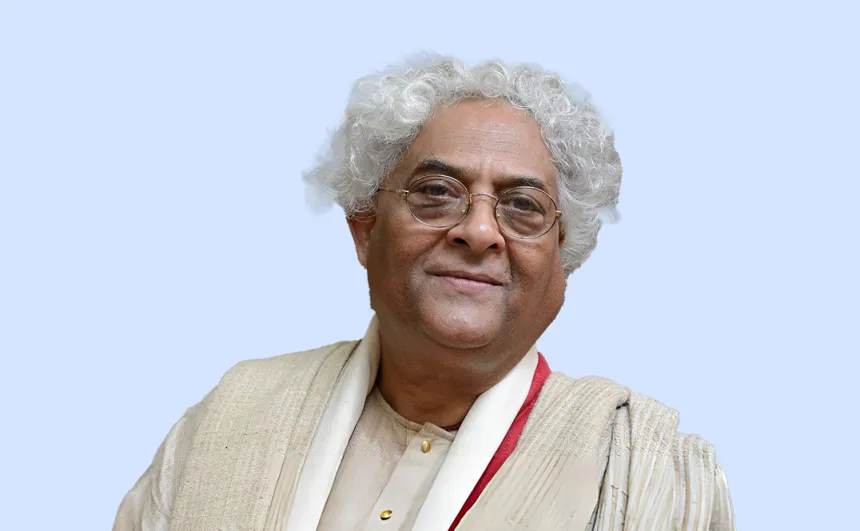
Shri. Rajeev Sethi — designer, scenographer and cultural visionary

Shri. Rajeev Sethi

Shri. Rajeev Sethi is one of South Asia’s foremost designers, scenographers, and cultural visionaries, celebrated for elevating India’s craft heritage on the global stage. Founder of the Asian Heritage Foundation and a founding member of INTACH, he has led landmark exhibitions like Aditi and The Golden Eye, and created the iconic Jaya He GVK New Museum at Mumbai Airport (T2).

His work bridges design, heritage, and community empowerment, earning him the Padma Bhushan, Order of Merit of the Federal Republic of Germany, and global recognition as a pioneer in cultural conservation and creative industries.

Rationale

In a world shaped by climate fragility, rapid technological evolution, and complex socio-cultural transitions, design research must evolve from craft-oriented problem-solving to systemic, transdisciplinary co-creation. This centre aims to:


  • Build design research capacity aligned with societal challenges
  • Provide methodological depth for the Research Institute (RI)-linked capstone structure
  • Support the Living Learning Scholar Community (LLSC) mission of collaborative knowledge creation
  • Ensure WPU GŌA’s design education meets global standards of research rigour
Design research team reviewing data and charts at WPU GŌA

Objectives

  • Advance rigorous design methods grounded in systemic and transdisciplinary inquiry.
  • Develop design research that enables ethical, sustainable societal transformation.
  • Strengthen RI-linked research and foster high-impact capstone outcomes.
  • Support LLSC initiatives through community-engaged design practices.
  • Build global design research leadership for emerging futures.
Researchers collaborating around a whiteboard at WPU GŌA

Mandate

To develop and disseminate rigorous, transdisciplinary design research that integrates systemic thinking, human-centred inquiry, and real-world application, enabling solutions that address societal, ecological, and technological challenges across scales.


Hands working on a technical design drawing at WPU GŌA
Design research scholar at work in a studio at WPU GŌA

Focused Activities

  • Research programmes in systemic design, socio-technical futures, and institutional innovation.
  • Design research studios embedded in major societal challenges defined by RIs.
  • Teaching Support and Pedagogy Development including design theory modules, research methods, and capstone scaffolding.
  • Field Immersions and Community Engagement in partnership with LLSCs and local ecosystems.
  • Method Development and Knowledge Production (frameworks, tools, taxonomies, templates).
  • Collaborative Projects with global design research networks and industry partners.

Operational Plan

Annual Design Research Summit gathering international scholars and practitioners

Methods and Futures Winter/Summer Schools for students and faculty

Systemic design studios co-supervised with RI faculty for capstone alignment

Workshops and masterclasses on research methods, prototyping, design ethics, and scaling innovation

Research Publications: working papers, toolkits, design frameworks, evidence briefs

Cross-campus design challenges integrating LLSCs and transdisciplinary electives

Visiting scholar and practitioner residencies

Partners shaking hands over coffee at WPU GŌA

Partnerships and Alliances

Academic

Global design research schools, centres for systemic design, speculative design, sustainability, human-computer interaction, and public systems.

Industry

Technology companies, design consultancies, regenerative design firms, mobility and product design industries, healthcare design organisations.

Government

Urban development departments, innovation missions, public service delivery organisations, sustainability and climate agencies.

Community and Civil Society

Local groups linked with LLSCs, along with NGOs and foundations working in environment, culture, public health, livelihoods, and youth development. These partnerships enable vertical integration with RIs and horizontal integration with LLSCs, aligned with the institution’s mandate.

Outcomes and Impact

  • Establishment of a nationally recognised hub for transdisciplinary design research
  • Strengthened RI-based capstone outputs through robust design methodology support
  • Creation of a design research ecosystem integrating technology, society, ecology, and culture
  • Enhanced student employability through rigorous, portfolio-quality research immersion
  • Global partnerships establishing WPU GŌA leadership in systemic design education
  • Evidence-based frameworks influencing policy, public systems, and sustainable development
  • Professionalisation of design research in India through methods, toolkits, and open knowledge systems
WPU GŌA design research community collaborating outdoors

Members

Prof. Delfina Fantini van Ditmar — Professor in Research & Chair,

Prof. Delfina Fantini van Ditmar

Professor in Research & Chair,

Prof. Praveen Nahar — Professor of Design,

Prof. Praveen Nahar

Professor of Design,

Prof. Singanapalli Balaram — Distinguished Visiting Professor,

Prof. Singanapalli Balaram

Distinguished Visiting Professor,