WPU GŌA
Research Institute on Advanced Materials, Manufacturing and Emergent Device Systems at WPU GŌA

Advanced Materials, Manufacturing and Energy Systems

The WPU GŌA campus is envisioned as a hub of excellence dedicated to pioneering research, innovation, and education in the rapidly evolving fields of advanced materials, energy-efficient and affordable green manufacturing technologies, as well as emerging device systems.

It will focus on the domains of semiconductors, quantum and energy technologies, as well as sensing and communication devices for strategic sectors such as agriculture, water, defence, aerospace, etc. By integrating engineering, physics, chemistry, biodesign, computational sciences, AI, and data science, it aims to drive breakthroughs in sustainable materials, smart manufacturing, and industrial innovation.

Research at the Research Institute on Advanced Materials, Manufacturing and Emergent Device Systems

Rationale

  • Growing demand for advanced materials in aerospace, transportation, electronics, sensing, and healthcare, as well as in strategic sectors such as agriculture, defence, aerospace industries.
  • Need for sustainable, affordable, green, and energy-efficient materials manufacturing processes.
  • India’s strategic focus on strengthening materials manufacturing capabilities under initiatives like Make in India and Atmanirbhar Bharat.
  • Opportunity to position WPU GŌA as an international leader in advanced materials research. Innovation, IP creation, translation to industrial sector.
  • Bridging the gap between academic research and industrial applications in materials research.

Objectives

  • Advance transdisciplinary research in advanced materials, manufacturing and emergent device systems.
  • Design and develop new materials and affordable green processing methodologies for multiple industrial and societal applications.
  • Foster industry-academia-policy convergence for translational impact.
  • Train next-generation researchers and engineers through experiential learning and hands-on training.
  • Build global partnerships to strengthen India’s role in advanced manufacturing and emergent device development ecosystems.

Mandate

The Institute will advance research and innovation in advanced materials and manufacturing technologies as well as emergent device systems in multiple sectors of national importance and international significance such as semiconductors, quantum, advanced sensors, robotics, AI/ML etc. By integrating science, engineering, and industry collaboration. Its mandate is to develop sustainable materials, green, smart and energy efficient manufacturing, and translational research leading to IP creation (patents), high impact publications, and proof-of-concept demonstrations (TRL 4) that could invite industry interest.

Research Themes

Advanced Functional Materials

Advanced Functional Materials

Nanomaterials, composites, biomaterials

Sustainable Manufacturing

Sustainable Manufacturing

Energy-efficient, green, and affordable processing methods; waste-to-value and waste reduction; circular economy approaches
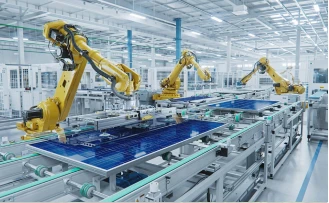
Smart Manufacturing and Industry 4.0

Smart Manufacturing and Industry 4.0

Automation, robotics, additive manufacturing.

Plan

From conception to execution: a phased roadmap for research and innovation development.

I

Phase I (Year 1–2)

Establish core labs, recruit faculty, initiate pilot projects.

II

Phase II (Year 3–5)

Expand research clusters, launch doctoral programs, secure industry partnerships.

III

Phase III (Year 5+)

Scale translational research, incubate startups, achieve global recognition.

Impact and outcomes of advanced materials research at WPU GŌA

Impact and Outcomes

  • Development of new materials, affordable and green manufacturing technologies as well as new architectures of emergent devices for energy, environment, transportation, robotics and other such sectors.addressing, industrial and societal challenges.
  • Creation of startups and patents driving India’s manufacturing competitiveness.
  • Enhanced student employability and global competitiveness.
  • Strengthened academic-industry-policy linkages.
  • Contribution to Sustainable Development Goals (SDGs).
Partnerships and alliances at WPU GŌA

Partnerships and Alliances

  • Collaborations with international universities and research centres in materials and manufacturing.
  • Alliances with industry leaders in aerospace, automotive, electronics, healthcare and strategic sectors such as defence, agriculture, aerospace, water etc.
  • Engagement with government agencies and policy think-tanks.
  • Partnerships with NGOs and community organizations for societal outreach.
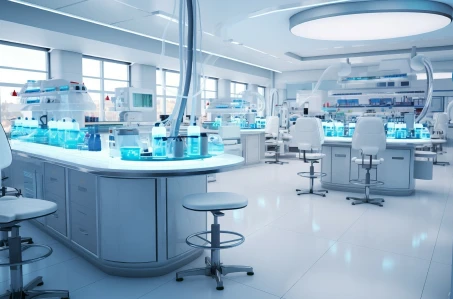
State-of-the-art laboratories and infrastructure at WPU GŌA

Infrastructure and Resources

  • State-of-the-art laboratories for materials synthesis, characterization, and manufacturing.
  • Computational facilities for materials modelling and simulation.
  • Innovation hubs and incubator spaces for startups.
  • Collaborative classrooms and seminar halls.
  • Access to shared resources across MIT-WPU campuses.

Members