
Industry
CSR divisions, inclusive-tech companies, digital public infrastructure initiatives, social-impact incubators.

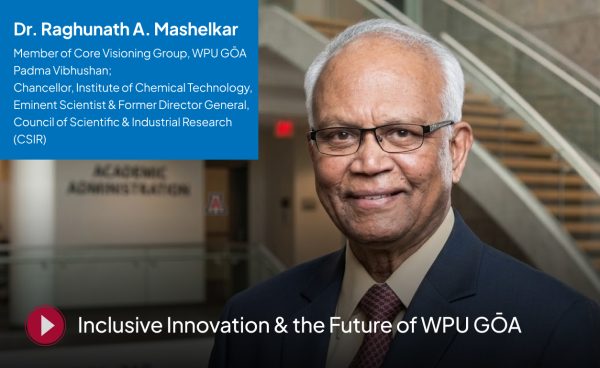
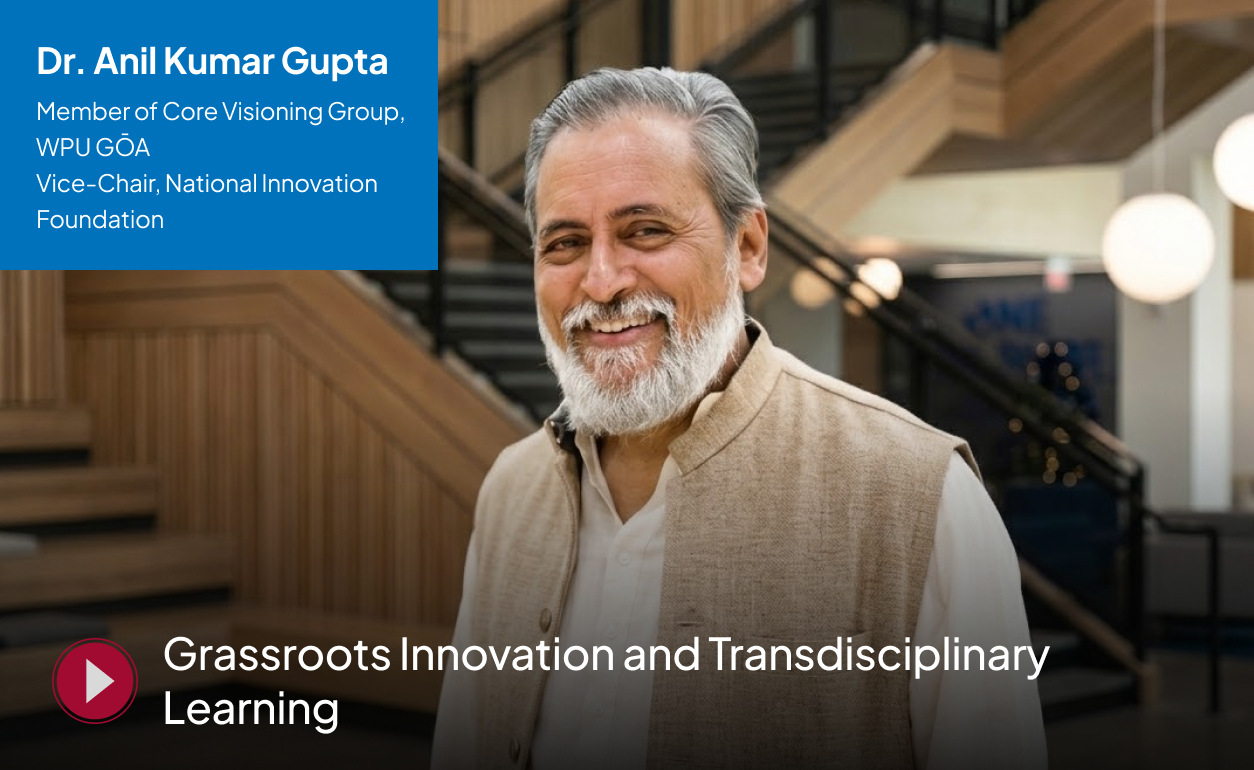
The Centre for Inclusive Innovation is established to honour Dr. Raghunath A. Mashelkar, pioneer of the “More from Less for More” (MLM) paradigm of inclusive innovation, and Prof. Anil K. Gupta, internationally acclaimed scholar of grassroots creativity, and founder of the Honey Bee Network. Their work demonstrates that innovation can be affordable, accessible, ethical, community-rooted, and capable of scaling to millions. This centre embodies their shared vision of combining science, frugality, grassroots ingenuity, and institutional systems to advance socially just and sustainable futures.

WPU GŌA's transdisciplinary governance model requires Centres of Excellence to act as global validators and integrators within a system that includes Research Institutes (RIs) and Living Learning Scholar Communities (LLSCs).
This centre fulfils this mandate by enabling the university to address complex societal challenges, such as livelihoods, public health, ecological resilience, youth capability, and ethical technology, through integrated, field-embedded and research-driven inclusive innovation.
It links knowledge creation (Research Institutes), community understanding (Living Learning Scholar Communities), and global best practice (Centers of Excellence) to produce scalable, community-centred solutions.

To catalyse frugal, inclusive, community-anchored innovation at population scale by integrating grassroots knowledge, scientific rigour, systems thinking, and transdisciplinary collaboration across Research Institutes (RIs), Living Learning Scholar Communities (LLSCs), and global innovation networks.

CSR divisions, inclusive-tech companies, digital public infrastructure initiatives, social-impact incubators.
Institutions specialising in inclusive innovation, public policy, sustainability, systems thinking, and design research.
State innovation missions, rural livelihood programmes, ministries (MSME, Environment, Education), local government bodies.
SHGs, cooperatives, grassroots innovators, NGOs, rural and tribal communities linked to Living Learning Scholar Communities.
Frugal innovation labs, grassroots innovation networks, social enterprise ecosystems.