WPU GŌA
B.Tech in Energy Systems Engineering

B.Tech in Energy Systems Engineering

How will the world move from fossil fuels to clean, intelligent, and resilient energy systems?

What technologies will power the next generation of electric mobility, smart grids, and climate-responsive infrastructure?

In a century defined by sustainability, who will engineer the systems that keep societies running?

If such questions inspire you, Energy Systems Engineering may be perfect for you. The B.Tech in Energy Systems Engineering at WPU GŌA is a forward-looking Programme designed at the intersection of electrical, mechanical, chemical, environmental, and digital engineering. It prepares students to design, optimise, and manage the intelligent, sustainable, and high-reliability energy systems of the future.

Unlike traditional Programmes that treat power generation, transmission, distribution, storage, and consumption as separate entities, WPU GŌA trains students to see energy systems as interconnected networks that are dynamic, data-driven, and deeply embedded in global sustainability goals.

You will be taught by faculty who are researchers, technologists, designers, behavioural scientists, and other professionals, all connected to the WPU GŌA conclave of Centres of Excellence and Research Institutes. You will develop fluency in thermal systems, renewable energy, grid management, electrochemistry, control systems, power electronics, embedded technologies, artificial intelligence for energy systems, and life-cycle analysis.

Globally too, organisations are seeking professionals who can integrate engineering depth with cross-domain fluency, connecting programming with psychology, data with design, cybersecurity with governance, and AI with ethics. WPU GŌA transdisciplinary learning model and TDP structure have been specifically designed to prepare students for this new world.

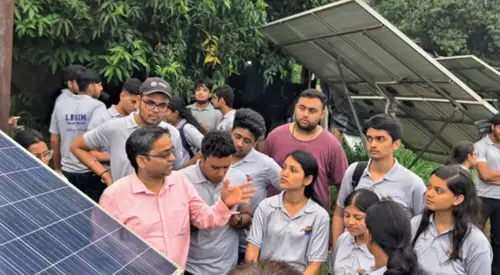
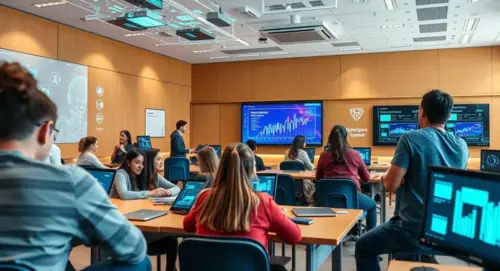
Experiential learning is at the heart of the Programme. Labs, field visits, energy audits, industrial exposures, modelling studios, and system design projects help students apply theory to real-world infrastructure.

What Will You Learn?

Year 1

You build strong fundamentals in electrical and electronics engineering, physics for energy systems, engineering mathematics, thermodynamics, heat transfer, chemistry for energy, and energy resources. Courses in environment and sustainability set the ethical and global context for the energy transition. An International Immersion exposes you to global ecosystems, companies, industries, techniques and Innovation hubs.

Year 2

You advance into electrical machines, power systems, material science for energy, power electronics, renewable energy technologies, control systems, and microcontroller applications. These courses help you understand how energy flows, converts, and is managed in real systems. You will also participate in an NGO/Social Immersion applying some of your knowledge to real-world problems in the rural areas of India.

Year 3

You learn energy system design, power converters and drives, power system operations, AI for energy systems, energy storage systems, and lifecycle assessments. Real-world applications are emphasised through minor projects, energy audits, and system operation studies. You also study energy policy and regulations, understanding the governance frameworks shaping global energy transitions. You will also finalise your specialisation in one of the three pathways: Renewable Energy Systems & Modelling; Smart Energy systems and Power quality; Electric Mobility, Green Buildings & Computational Energy Systems.

Year 4

You gain global or industrial exposure through international immersion or an internship. Courses in energy efficiency, modern renewable systems, and performance assessment prepare you for specialized roles. The Programme allows you to explore cutting-edge developments such as hydrogen systems, green mobility, or smart grid analytics.

Programme Structure

1st Year · Semester 1

Common Core + Engineering Domain Foundation. Fully Common Across Engineering.

Focus: Students develop analytical writing, systems thinking, foundational mathematics, computational tools, and physics grounding necessary for energy systems modelling and engineering problem-solving.

  • Writing & Rhetoric I (4 credits)
  • Programming for Engineers (Python) (4 credits)
  • Systems Thinking & Problem Framing (4 credits)
  • Engineering Physics I (Mechanics & Thermal Foundations) (4 credits)
  • Engineering Mathematics I (4 credits)

1st Year · Semester 2

Focus: Students build quantitative and scientific foundations, understand electricity and energy fundamentals, and contextualize engineering within philosophy, society, and sustainability.

  • Philosophical & Cultural Thought (4 credits)
  • Basic Electrical Engineering (4 credits)
  • Data, Information & Visualization (4 credits)
  • Engineering Physics II (EM)/Electromagnetic Energy Devices (4 credits)
  • Engineering Mathematics II (4 credits)

The courses listed are indicative and subject to change.

2nd Year · Semester 3

Domain Core + Early Program Core.

Focus: Students begin core energy sciences: thermodynamics, mechanics, circuit theory, and renewable energy fundamentals. Technical writing deepens in disciplinary context.

  • Writing in the Disciplines (4 credits)
  • Circuit Theory (4 credits)
  • Thermodynamics I (4 credits)
  • Renewable Energy Resources (4 credits)
  • Engineering Mechanics (4 credits)

2nd Year · Semester 4

Focus: Students integrate thermodynamics with fluid systems and power generation technologies. AI literacy frames energy analytics and grid modernization.

  • AI Literacy & Responsible Technology (4 credits)
  • Power Generation Systems/Power System Analysis (4 credits)
  • Thermodynamics II (4 credits)
  • Laboratory: Thermal & Electrical Systems (4 credits)
  • Fluid Mechanics (4 credits)

The courses listed are indicative and subject to change.

3rd Year · Semester 5

Advanced Core + Specialisation Begins.

Focus: Students deepen system-level understanding with electrical machines, power electronics, heat transfer, and energy storage principles bridging thermal and electrical domains.

  • Heat & Mass Transfer (4 credits)
  • Energy Storage Systems (Batteries, Hydrogen, Thermal) (4 credits)
  • Electrical Machines (4 credits)
  • Communication, Collaboration & Leadership (4 credits)
  • Power Electronics (4 credits)

3rd Year · Semester 6

Focus: Students begin specialisation while studying smart grids, control systems, and energy modelling. Project planning skills prepare them for large-scale infrastructure work.

  • Smart Grids & Energy Analytics (4 credits)
  • Within-Domain Specialisation I (4 credits)
  • Control Systems for Energy Applications (4 credits)
  • Planning, Execution & Project Management (4 credits)
  • Energy Markets & Regulation (4 credits)

The courses listed are indicative and subject to change.

4th Year · Semester 7

Specialisation + Cross-Domain + Capstone.

Focus: Students deepen technical focus in chosen energy sub-domain while gaining real-world exposure through internship and interdisciplinary collaboration.

  • Within-Domain Specialisation II (4 credits)
  • Cross-Domain Specialisation I (4 credits)
  • Within-Domain Specialisation III (4 credits)
  • Internship (Credit-bearing) (4 credits)
  • Directed Elective I (4 credits)

4th Year · Semester 8

Focus: Students execute an integrated energy systems project such as renewable plant design, microgrid architecture, EV charging infrastructure, hydrogen systems, or energy transition modelling integrating technical, economic, environmental, and societal dimensions.

  • Capstone Project (12 credits)
  • Directed Elective II (4 credits)
  • Cross-Domain Specialisation II (4 credits)

The courses listed are indicative and subject to change.

Directed & Cross-Domain Electives

Directed Electives

Students choose 2, 8 Credits:

  • Advanced Power Electronics
  • High-Voltage Engineering
  • Sustainable Building Energy Systems
  • Offshore & Marine Energy Systems (Goa context)
  • Climate Risk Modelling
  • Microgrid Design Studio

Cross-Domain Specialisation Options

Students choose one of the following curated pathways from another domain or design their own cross-domain specialization under supervision from an academic advisor:

  • Design Thinking & Innovation
  • Behavioral Science & Human Decision Making
  • Entrepreneurship & Venture Creation
  • Media Communication & Digital Storytelling

The courses listed are indicative and subject to change.

Specialisations

Within-Domain Specialisations

Students choose one. You are prepared for careers across fabless semiconductor companies, embedded tech firms, defence and aerospace R&D, automotive electronics, AI-on-chip innovation labs, sensor design units, and global hardware companies. The courses listed are indicative and subject to change.

1

Renewable & Sustainable Energy Systems

This specialization focuses on the engineering, integration, and optimization of renewable technologies, including solar, wind, hydropower, bioenergy, and emerging clean-energy systems. Students learn how renewable energy is generated, how it integrates into regional and national grids, and how to design decentralized systems for rural and urban contexts.

Core Focus
  • Advanced Solar & Wind Systems Design
  • Bioenergy & Waste-to-Energy Systems
  • Life-Cycle Assessment & Carbon Accounting
  • Distributed Energy Systems

Career Roles Include: Renewable Energy Engineer; Solar System Designer; Wind Energy Analyst; Energy Consultant; Sustainability Engineer; Clean-Tech Project Manager. India's solar parks, rooftop solar initiatives, and decentralized energy projects offer enormous placement potential. Globally, Europe, the Middle East, Australia, and Africa continue to hire renewable-energy talent as they expand utility-scale and distributed systems. The field also opens pathways into climate-tech startups, NGOs working on energy access, global development agencies (UNDP, World Bank), and companies working on next-generation energy systems such as floating solar, offshore wind, and waste-to-energy solutions.

2

Smart Grids & Energy Analytics

This specialisation blends electrical engineering with digital technologies, data analytics, IoT, automation, and AI, to build intelligent, efficient, and resilient power systems. Students learn about grid modeling, forecasting, SCADA systems, smart meters, digital twins, and energy cyber-physical systems. As India modernizes its grid infrastructure to support renewables, electric vehicles, and demand-side management, this skillset is vital.

Core Focus
  • Power System Stability & Protection
  • Grid Digitalization & SCADA
  • Energy Forecasting & Data Analytics
  • AI Applications in Energy Systems

Career Roles Include: Smart Grid Engineer; Energy Analyst; Load Forecasting Specialist; Grid Automation Engineer; Energy Data Scientist; Demand Response Analyst. Companies in utilities, urban infrastructure, smart city missions, and energy-tech startups actively hire such talent. Globally, power engineering companies, transmission system operators, and energy analytics firms are expanding their digital divisions. This specialisation prepares graduates for roles with international utilities, consulting companies (McKinsey, BCG, Deloitte), and clean-tech R&D institutes focusing on smart systems integration.

3

Energy Storage & Electrification Technologies

This track focuses on storage technologies, including lithium-ion batteries, flow batteries, thermal storage, hydrogen storage, and electrification domains such as EVs, charging infrastructure, and hybrid energy systems. Students learn how energy is stored, how stored energy interacts with grids, and how to engineer electrified mobility systems.

Core Focus
  • Advanced Battery Systems & BMS
  • Hydrogen Energy Systems
  • Electric Mobility & Charging Infrastructure
  • Power Conversion for Electrification

Career Roles Include: Battery Systems Engineer; Energy Storage Analyst; EV Powertrain Engineer; Charging Infrastructure Planner; Hybrid Systems Designer; Battery Manufacturing Engineer. India's rapid push toward electric mobility, supported by FAME, PLI, and private-sector investments, creates enormous demand. Globally, companies in the U.S., Europe, China, and Southeast Asia are scaling battery gigafactories, EV production lines, and grid-scale storage projects. Engineers trained in storage technologies have some of the highest global mobility and salary potential due to the scarcity of talent in this domain.

The Four-Year Immersion Journey

1st Year

1st Year

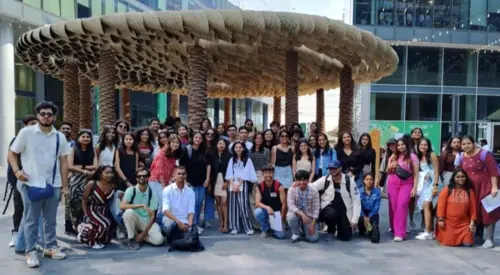
Students participate in a two-week International Immersion, visiting technology clusters, AI labs, smart city platforms, and innovation ecosystems. They work on a Mini Grand Challenge that builds interdisciplinary collaboration and early systems thinking.

2nd Year

2nd Year

The NGO / Social Immersion exposes students to education, rural development, social enterprises, public data systems, and community-level infrastructure. Their reflections translate into system maps and engineering briefs. They also spend one week at the Life Transformation Centre (LTC); developing their ethical lens, leadership skills, and reflective clarity, and undertake a Pune industrial visit to observe real-world production environments.

3rd Year

3rd Year

The semester-long Grand Challenge Studio I is a defining experience. Students tackle real problems such as AI-driven healthcare insights, digital inclusion tools, data-driven environmental prediction, or behavioral analytics for public systems. The National Immersion at an IIT deepens exposure to cutting-edge engineering research. The Taiwan trade show introduces them to global market trends, cyber-physical innovations, and AI/ML industrial applications. Their 12-week industry internship, whether in AI labs, cybersecurity firms, digital consulting, cloud companies, or startups, becomes the foundation for Grand Challenge Studio II, where they turn insights into working prototypes.

4th Year

4th Year

Students may undertake a semester exchange with a partner university abroad, focusing on AI research, advanced computing, HCI, robotics, or computational sciences. The Active Citizenship Program provides a direct understanding of governance, digital policy, regulatory frameworks, and civic-tech. Their Capstone Project synthesizes technical depth with cross-domain insight.

Highlights

1

End-to-End Energy Systems

Curriculum covers the entire value chain: energy materials (batteries, PV), device prototyping, power electronics, controls, storage and grid integration.

2

Decarbonisation & Resilience Engineering

Coursework and studios emphasise low-carbon pathways, lifecycle carbon accounting, climate risk assessment and resilient system design.

3

Systems Thinking for Energy Infrastructures

Students learn how devices interact with grids, telecoms, software platforms and policy, preparing them for roles in integrated systems (smart cities, utilities, EV infrastructure).

4

Community & Human-Centered

Students design with citizens through community energy audits, participatory planning, and human factors for energy, ensuring that graduates build systems that are safe, adoptable, and equitable.

5

A Flexible Curriculum designed for the Energy Transition

Our Energy Systems Engineering is structured through programme-centric rigour, basket-based flexible course delivery, structured specialisation pathways and a mandatory cross-domain integration. Our students graduate with strong grounding in thermodynamics & energy conversion, power systems, renewable technologies, energy storage, grid integration and systems modelling while maintaining flexibility to specialize in emerging domains.

6

Specialised Energy Tracks

Students choose one structured within-domain specialisation such as Renewable & Sustainable Energy Systems, Smart Grids & Energy Analytics and Energy Storage & Electrification Technologies.

7

Integration of Emerging Technologies

Our Energy Systems Engineering programme is digital. Students gain exposure to AI/ML for Energy Forecasting & Demand prediction, Data-driven Grid Optimization, Digital Twins for Energy Infrastructure, IoT-enabled Smart Grids and Electrification & Decarbonization Modeling.

8

11 Months of Structured Professional Experience Before Graduation

Students graduate not with a single internship, but with a sequence of industry, research, and social sector engagements that progressively build professional maturity, culminating in a 6-month capstone embedded in industry, startup, or research environments.

9

Energy Policy, Management & Economics Integration

Energy transitions require more than engineering. Through structured cross-domain pathways, students engage with energy policy and regulatory frameworks, economics of renewables, carbon markets and sustainability metrics, infrastructure finance and public policy & governance.

10

Hands-On Learning

Our energy engineering program is experiential. Studios are embedded every semester. Students work on microgrid simulations, renewable system design, energy efficiency audits, smart grid analytics, storage optimization models and electrification prototypes.

11

Smart Energy Systems & Digital Integration

Our Energy engineering program is not mechanical-only or electrical-only. It integrates hardware systems, digital intelligence, policy frameworks, sustainability science and economic viability. Graduates are prepared for roles in renewable project engineering, smart grid analytics, storage innovation, energy consulting, infrastructure planning, sustainability strategy and climate-tech entrepreneurship.

The Future

The Future

The future of energy engineering is defined by decarbonization, electrification, and digitalization. Over the next 20 years, the world will re-engineer its energy infrastructure, demanding engineers who can integrate technical, behavioral, economic, and design-oriented perspectives. Graduates from this Programme will be equipped to lead that transformation, thanks to our unique curriculum and deep domain specialisation. The specialisations will remain future proof as global priorities shift:

Renewable Energy will expand with solar, offshore wind, bioenergy, and hybrid systems.

Smart Grids will be central to balancing demand, storage, and cyber-physical systems.

Energy Storage & Electrification will accelerate due to EVs, grid storage, and hydrogen systems.

Overall, graduates will be positioned to work in renewable energy companies, global utilities, R&D labs, policy organizations, climate-tech startups, and international development agencies. With energy security and sustainability becoming global priorities, Energy Systems Engineering remains one of the most impactful and future-forward engineering careers.

WPU GŌA's Energy System Engineering Programme prepares students to engineer this future, balancing technical mastery with systems thinking, ethical reasoning, global awareness, and environmental responsibility.

Be a Part of WPU GŌA

Please fill out the form, and our team will get in touch with you!

Apply Now