Coral Reef Protection and Restoration
Protecting coral reefs from thermal stress, supporting reef-dependent communities.


Areas and Focus
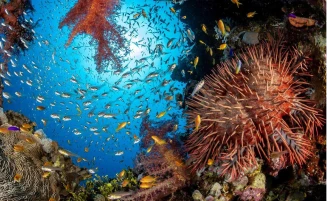
Research focused on understanding, conserving, and restoring coral reefs and mangrove ecosystems along India’s coastline. The institute studies biodiversity health, climate resilience, habitat loss, and nature-based solutions that protect coastal communities and marine life.
Exploration and analysis of deep-sea environments to understand ocean processes, biodiversity, and human impact beyond shallow waters. Research integrates marine biology, oceanography, and emerging technologies to advance knowledge of largely unexplored ecosystems.
Developing environmentally responsible aquaculture practices that balance food security with ecological health. Research includes sustainable farming systems, disease management, water quality, and innovations that reduce environmental impact while supporting coastal livelihoods.
Examining policies, legal frameworks, and governance systems that shape ocean use and conservation. Research supports evidence-based decision-making for marine protection, sustainable fisheries, coastal planning, and international maritime cooperation.
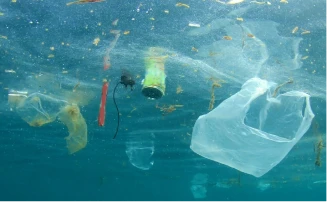
Investigating the sources, distribution, and impacts of microplastics in marine environments. Research focuses on ecological and human health risks, monitoring techniques, and solutions to reduce plastic pollution at local, national, and global levels.
Impact Areas
Protecting coral reefs from thermal stress, supporting reef-dependent communities.
To ensure food security for millions dependent on marine protein.
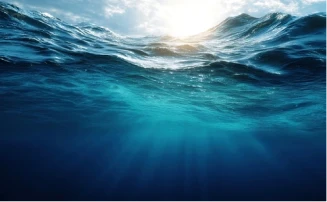
Building sustainable marine biotechnology, and models that prioritize vulnerability and justice.
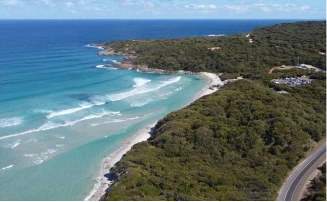
Addressing microplastics, mining impacts, and other pollution threats
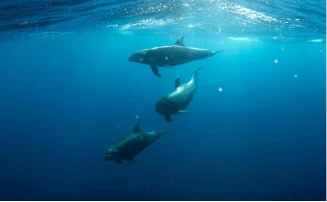
Protecting critical marine habitats through research, latest autonomous technology and AI analytics.
Ensuing transparent, equitable and responsive ocean governance to protect the rights of affected stakeholders and populations.
Build resilience in coastal communities facing climate impacts and extreme events.
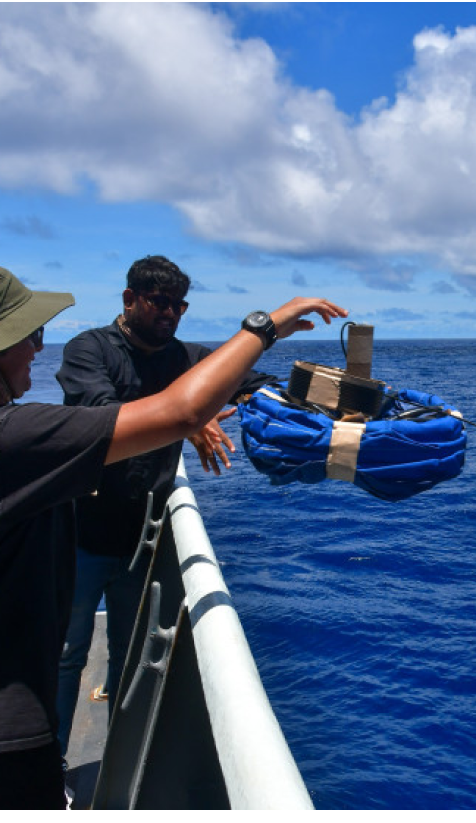
Establishing integrated ocean observing systems that track and detect environmental changes to support evidence-based management across multiple scales.
Research Methodologies
We use integrated methodologies that combine marine science, advanced technologies, socio-economic assessment, and policy analysis to understand and improve ocean systems. Our work is grounded in community engagement, transdisciplinary collaboration, and adaptive learning. We also test innovative solutions through real-world pilot projects to ensure practical and sustainable impact.